

- mzmauto
How Mileage Limits and Usage Affect Auto Leasing Decisions
Mileage limits play a central role in determining whether auto leasing is a practical option for a driver’s lifestyle. While leasing can offer predictable monthly costs and access to newer vehicles, usage patterns heavily influence overall value and end-of-term obligations.
Drivers researching Auto leasing in Burbank, CA, often underestimate how daily commuting habits, travel frequency, and driving behavior affect lease suitability. This article explains how mileage limits work, why they matter financially, and how realistic usage evaluation helps drivers avoid unexpected costs and dissatisfaction during a lease term.
Understanding Mileage Limits in Auto Leasing Agreements
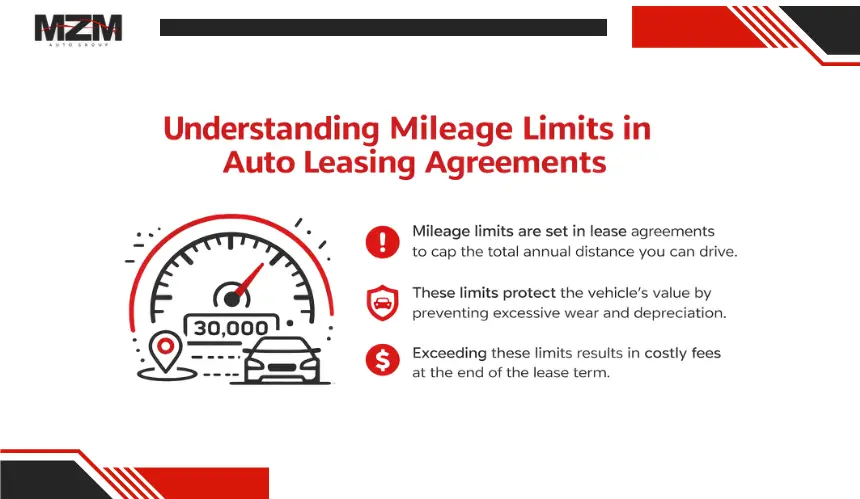
Mileage limits are built into lease agreements to protect vehicle value over time. Because leased vehicles are returned at the end of the term, usage directly affects depreciation calculations.
How Mileage Allowances Are Structured
Most lease agreements include annual mileage allowances, commonly structured in ranges such as 10,000, 12,000, or 15,000 miles per year. These limits are established based on expected wear and resale value. The total allowable mileage is calculated by multiplying the annual limit by the lease duration, creating a defined usage boundary that drivers are expected to stay within throughout the lease term.
Why Mileage Directly Affects Lease Costs
Mileage impacts a vehicle’s residual value, which is the estimated worth at the end of the lease. Higher mileage accelerates depreciation, increasing lender risk. To offset this, lower mileage limits generally result in lower monthly payments, while higher allowances raise costs. This tradeoff makes mileage selection a key financial decision rather than a minor contract detail.
How Driving Habits Influence Lease Suitability
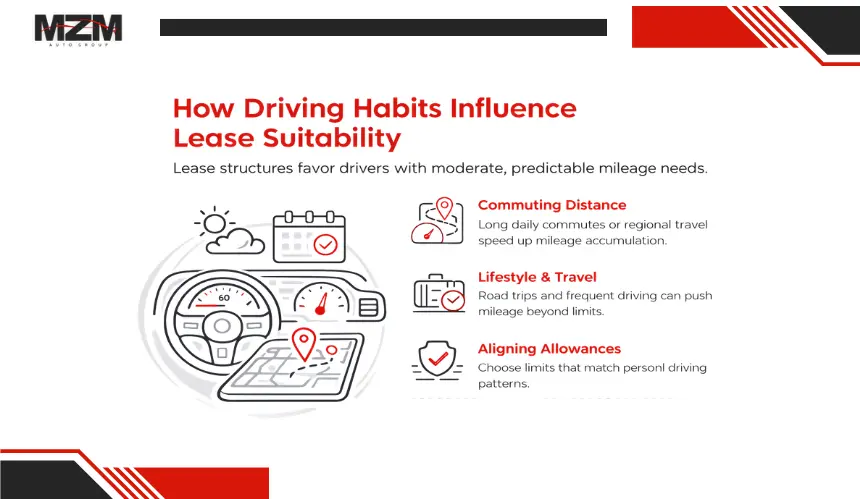
Daily usage patterns vary widely, and lease structures favor drivers with predictable or moderate mileage needs. Understanding personal driving behavior is essential before committing to a lease.
Commuting Distance and Frequency
Drivers with long daily commutes or frequent regional travel often accumulate mileage faster than anticipated. Even small underestimations in daily driving can compound over several years, pushing total usage beyond contract limits. Lease suitability improves significantly when the commuting distance aligns with the selected mileage allowance.
Lifestyle and Travel Considerations
Weekend travel, family obligations, and work-related driving all contribute to total mileage. Drivers who frequently take road trips or rely on a leased vehicle as their primary mode of transportation may find mileage limits restrictive. Leasing is generally more suitable for predictable, routine usage rather than variable or travel-heavy lifestyles.
The Financial Impact of Exceeding Mileage Limits
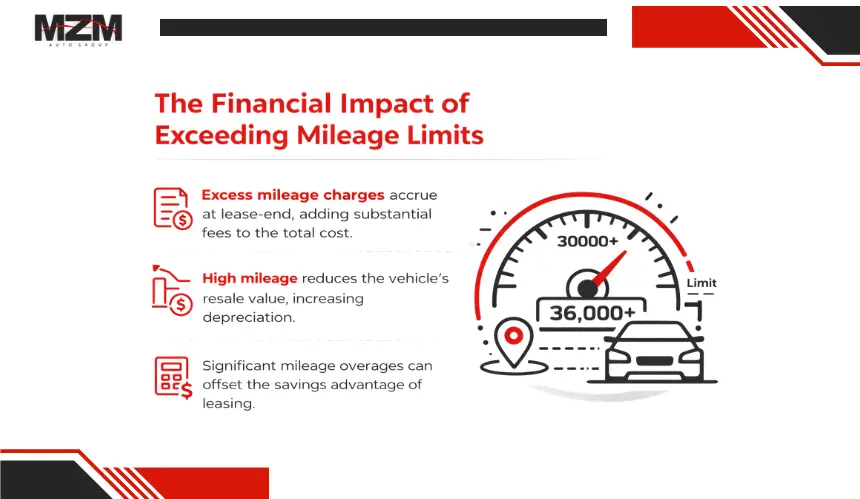
Exceeding mileage limits often results in per-mile charges that can significantly increase total lease cost. These fees are typically assessed at lease-end rather than incrementally.
How Excess Mileage Fees Are Calculated
Lease contracts specify a per-mile overage charge, commonly ranging from several cents to over twenty cents per mile. While these amounts appear small individually, thousands of excess miles can create substantial charges. Because fees are cumulative, exceeding mileage by a wide margin can eliminate the perceived cost advantage of leasing.
Why Excess Mileage Affects Resale Value
Higher mileage reduces resale appeal and market value. Lease providers factor this depreciation loss into excess mileage fees to recoup diminished asset value. Understanding this mechanism underscores why mileage planning is essential, not optional, when leasing.
Balancing Mileage Needs With Monthly Payment Goals
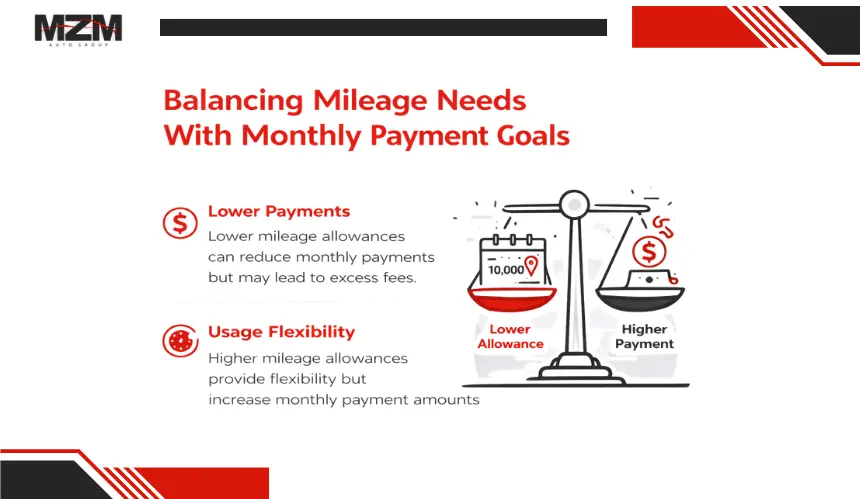
Mileage limits influence monthly lease payments, requiring drivers to balance affordability with realistic usage expectations.
Lower Payments Versus Usage Flexibility
Choosing a lower mileage limit can reduce monthly payments, but it increases the risk of overage fees. Conversely, higher mileage allowances provide flexibility but raise monthly costs. The most effective strategy is selecting an allowance that aligns with real-world driving patterns rather than aiming for the lowest possible payment.
Adjusting Mileage at Lease Inception
Mileage allowances are most flexible at the beginning of a lease. Drivers benefit from reviewing past driving data, such as annual odometer readings, to select appropriate limits. Adjusting mileage expectations early is far more cost-effective than addressing overages later.
Wear and Tear Considerations Tied to Vehicle Usage
Mileage is not the only usage-related factor evaluated at lease-end. Driving behavior and environmental exposure also influence condition assessments.
Relationship Between Mileage and Vehicle Condition
Higher mileage often correlates with increased wear on tires, brakes, and interior surfaces. Lease agreements typically include condition guidelines that define acceptable wear. Vehicles with excessive mileage are more likely to exceed these thresholds, increasing the risk of additional charges beyond mileage penalties.
Urban Versus Highway Driving Impact
Stop-and-go urban driving can accelerate wear more than highway travel, even at similar mileage levels. Usage type matters, as frequent braking and low-speed operation contribute to mechanical and cosmetic wear that may affect lease-end evaluations.
Planning Usage Over the Lease Term
Successful leasing outcomes depend on ongoing awareness, not a one-time decision at contract signing.
Monitoring Mileage Throughout the Lease
Tracking mileage periodically allows drivers to adjust driving habits if usage begins to exceed projections. Early awareness enables course correction, such as consolidating trips or using alternate transportation when feasible.
Considering Lease-End Options Early
Drivers approaching mileage limits may explore lease-end options such as early trade-in or vehicle purchase. Planning provides flexibility and reduces last-minute financial pressure at the end of the lease term.
Frequently Asked Questions
Can mileage limits be changed after a lease begins?
Mileage adjustments are generally limited after signing, and changes often come with higher costs than selecting appropriate limits upfront.
Is leasing suitable for high-mileage drivers?
Leasing is typically less cost-effective for high-mileage drivers due to overage fees and higher monthly payments for expanded allowances.
Do unused miles carry over between lease years?
Mileage is calculated over the full lease term, not annually, allowing flexibility in year-to-year usage as long as total limits are respected.
Are excess mileage fees negotiable?
Fees are contractually defined and rarely negotiable at lease-end, making proactive planning essential.
Does mileage affect the option to buy the vehicle?
Mileage influences resale value, but purchase options are typically fixed in the contract regardless of usage.
Making Informed Auto Leasing Decisions Based on Usage
Mileage limits and driving habits shape the actual cost and suitability of auto leasing. Drivers who align lease terms with realistic usage patterns experience fewer surprises and better overall value. By evaluating commuting needs, travel habits, and long-term driving behavior, leasing decisions become more predictable and financially sound. In the Burbank area, providers such as MZM Auto Group help drivers understand how mileage planning fits into broader leasing considerations, supporting informed choices that match real-world usage rather than assumptions.